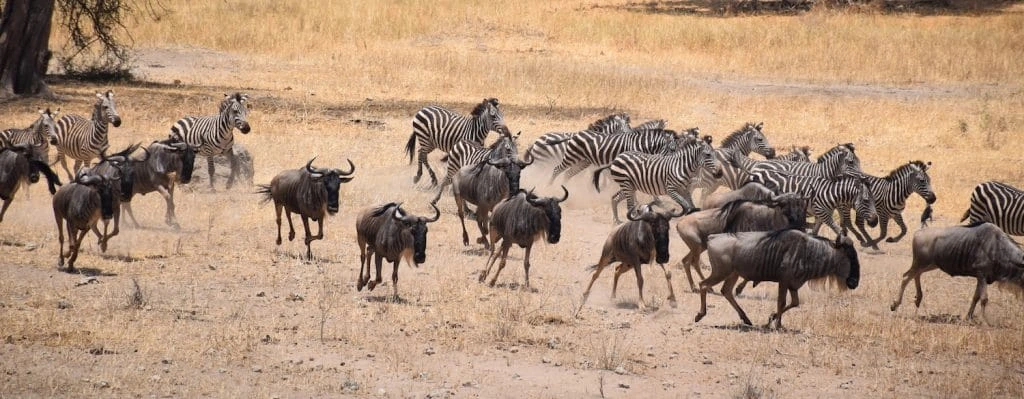
The Great Migration in the Serengeti is a continuous, year-round movement of over two million wildebeest, zebra, and gazelle across the Serengeti–Mara ecosystem. There is no single “best” month — each stage of the migration offers a different and equally spectacular experience. Knowing where the herds are at different times of the year helps you plan the most rewarding Serengeti safari.
1. January – February: Calving Season (Southern Serengeti & Ndutu)
At the start of the year, the migration gathers in the southern Serengeti and Ndutu region, where nutrient-rich grass supports the calving season. During these months, hundreds of thousands of wildebeest calves are born within a short period, attracting lions, cheetahs, hyenas, and other predators.
This is one of the best times for travelers interested in predator action, newborn wildlife, and photography, with open plains and excellent visibility.
2. March – April: Moving North Through Central Serengeti
As the short dry season ends, the herds begin moving northward through the central Serengeti, forming long migration columns across the plains. This period offers dramatic movement scenes, mating behavior, and fewer safari vehicles compared to peak months.
Although rainfall increases in April, the landscapes are lush and green, making this a rewarding time for travelers who prefer quieter safaris and scenic beauty.
3. May – June: Western Serengeti & Grumeti River Crossings
By May and June, the migration reaches the Western Serengeti, where the Grumeti River presents the first major obstacle. These crossings are less crowded than the Mara River but still intense, with crocodiles and strong currents testing the herds.
This stage marks the transition into the dry season and is ideal for travelers who want river crossings without peak-season crowds.
4. July – August: Northern Serengeti & Early Mara River Crossings
During July and August, the migration moves into the Northern Serengeti, approaching the Mara River. This is when some of the most dramatic river crossings begin, as massive herds hesitate, surge forward, and plunge into crocodile-infested waters.
This is one of the most popular times to visit Tanzania for safari, combining dry weather, excellent wildlife visibility, and iconic Great Migration moments.
5. September – October: Peak Mara River Crossings
September and October are considered the peak months for Mara River crossings, with repeated crossing attempts as herds move back and forth between Tanzania and Kenya. Predator sightings are frequent, and the dry season ensures clear viewing conditions.
For travelers whose main goal is to witness the most dramatic scenes of the Great Migration, this is often the preferred time.
6. November – December: Returning South to Serengeti Plains
As short rains begin, the herds gradually move south from the northern regions back toward the central and southern Serengeti. The landscape becomes greener, crowds thin out, and wildlife remains active throughout the parks. This period offers a more relaxed safari experience while still following the migration’s journey, making it a good option for travelers seeking balance between wildlife and comfort.